 HabitSeeds
A familiar story. A small step to try.
Every child runs into moments that are hard to talk about: a big fear, a friendship gone wrong, a new sibling, a mistake they want to put right. We write original books where a kid like yours faces a familiar situation, names the feeling, and practices something useful. Research on stories and shared reading informs our writing, alongside choices we make about warmth, clarity, and everyday life.
What guides our story writing
These principles bring together research, our writing choices, and suggestions for reading with your child. Each source tells you what the finding or guidance actually covers.
A familiar moment, a relatable child
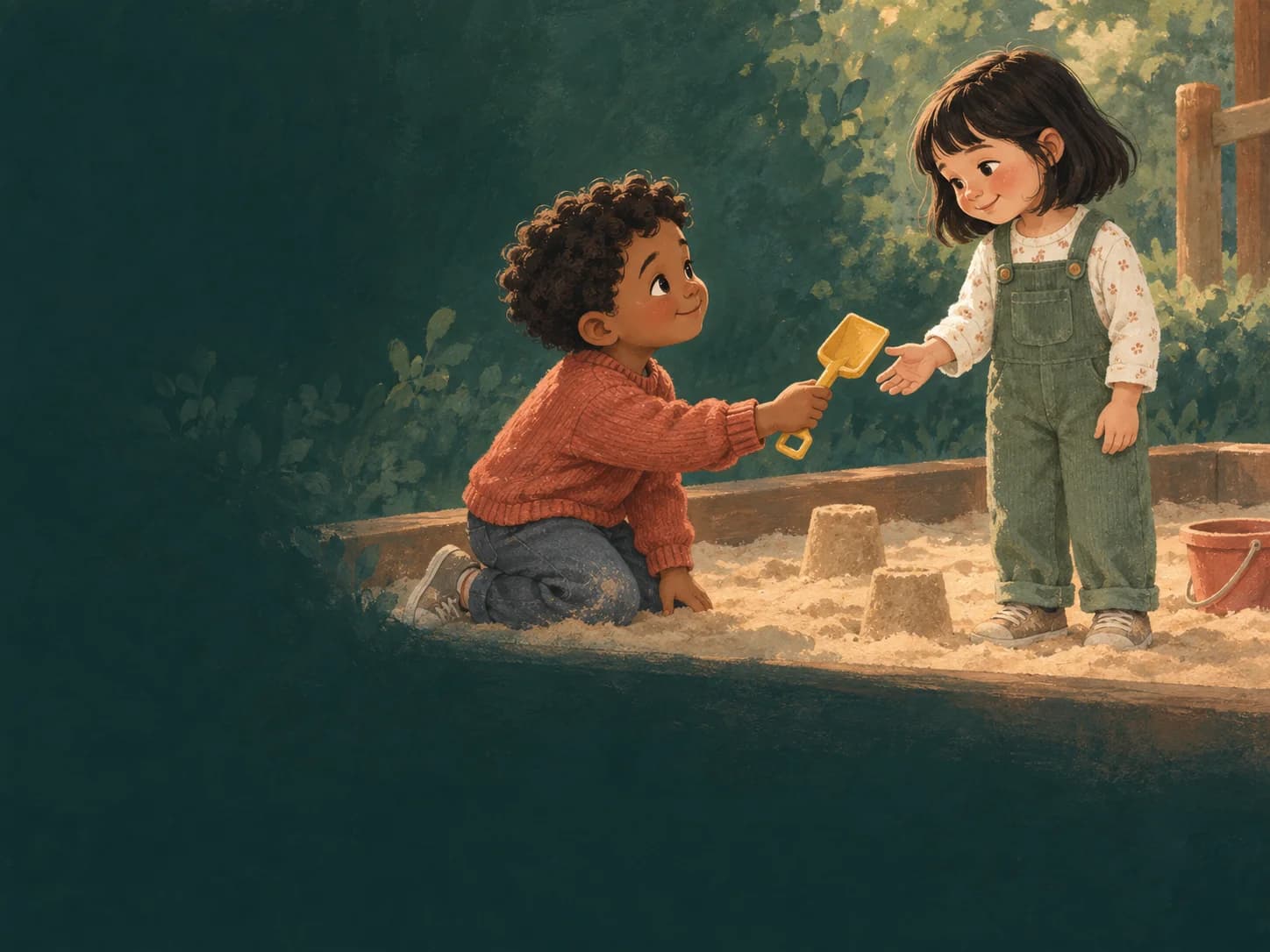
The hero is a human child with ordinary feelings and wants: a turn with a toy, more time to play, someone to sit beside. The situation reflects what you tell us your child is facing, in an everyday place like home, school, or the park. Their name puts them in the book; the experience gives them something to recognize.
One small action they can borrow
The hero practices something a child can actually say or do, like taking a slow breath, asking for a turn, or telling a grown-up they need help. The same words and action return on more than one page. That gives you a simple phrase to return to when the real moment comes.
A warm result, room to keep learning
We give the helpful choice a warm, visible result. A child who tells the truth is thanked for being honest; a child who repairs a mistake has a chance to reconnect. The ending can be hopeful while a worry or hard feeling still needs time and support.
Based on A 2014 study of stories about honesty in 3 to 7-year-olds
A clear lesson, a real conversation
The hero puts the useful idea into plain words, like “When I want a turn, I can ask.” While reading, you can invite your child to explain what happened: “Why did that help?” In two experiments with 5- and 6-year-olds, explaining parts of a story helped children identify its lesson and apply it to another situation.
Based on Walker and Lombrozo's 2017 study of explaining a story's lesson
Language shaped for their age
The selected age range guides the language. Younger children get short sentences, plain feeling words, and a simple action to repeat. Older children have more room for the hero's reasoning and another person's point of view. A longer book still needs a clear story a child can follow.
Feelings with a reason
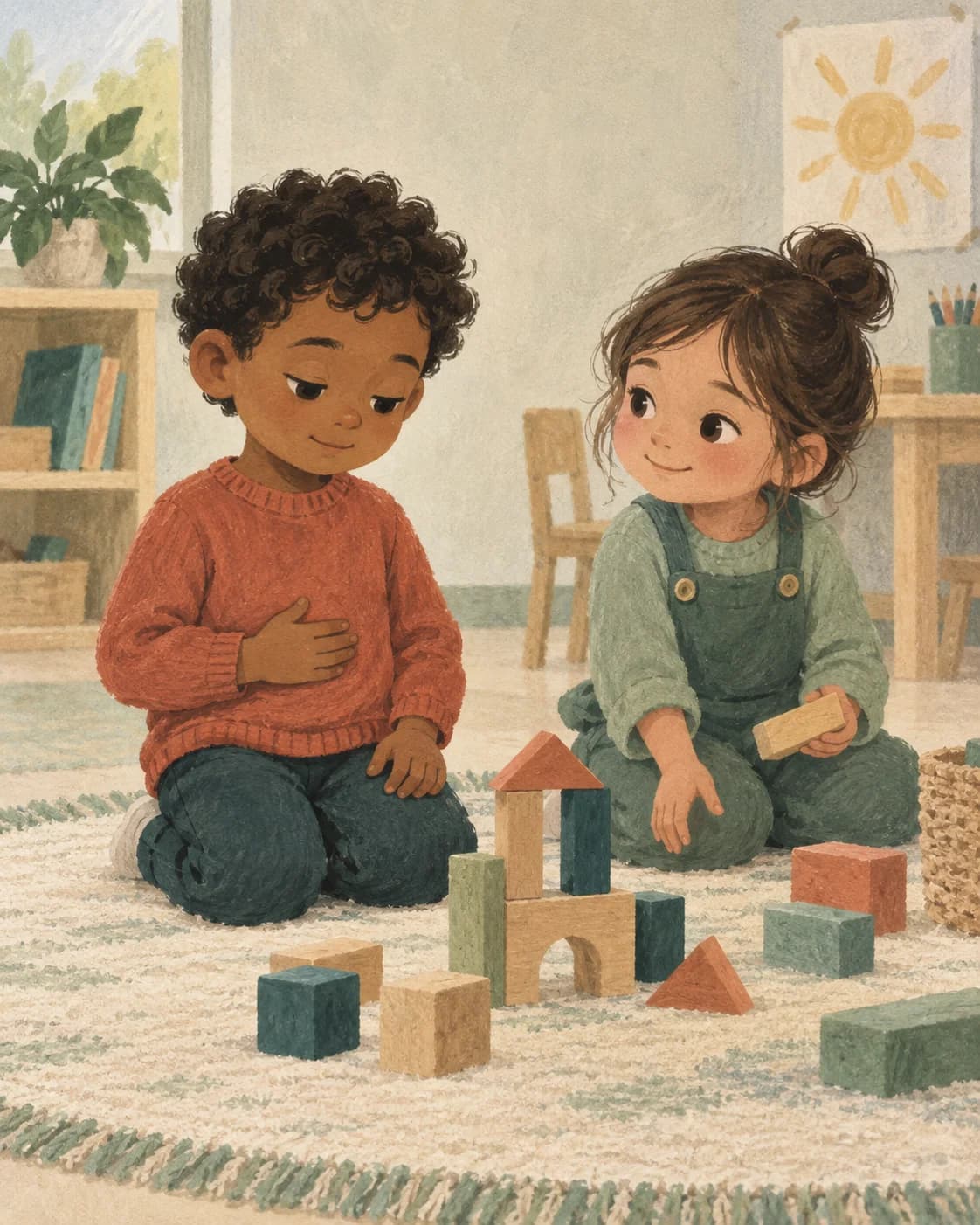
The story names feelings and what brings them on: “Sam felt sad because his tower fell.” That gives you an easy place to pause: “How does Sam feel? Why?” A helping grown-up notices and accepts the feeling, then helps with the next step.
Based on A 2013 study linking parents' emotion talk with toddlers' sharing and helping
One clear picture per page
Each illustration has one clear moment and an uncluttered background. The words carry the feeling, dialogue, or reason behind the action. In a study of beginning readers, removing irrelevant illustration details improved comprehension.
Kind, even when it goes wrong
A mistake gives the hero another chance to practice. Grown-ups appreciate effort and choices, and help calmly after a slip. Shame, teasing, and disgust have no place in our stories. The American Academy of Pediatrics advises against ridicule and punishment when responding to common childhood habits.
Based on American Academy of Pediatrics guidance on common childhood habits
Safety needs a grown-up
A child who is being bullied deserves adult help. A story can offer words for asking for that help, while the adults around the child take responsibility for listening and protecting them. Mistreatment is never the child's fault. For bullying or another safety concern, involve a trusted adult in real life too.
Based on StopBullying.gov guidance on supporting children who are bullied
A story to come back to
A familiar phrase and a predictable shape make room for your child to join in. In one study, 3-year-olds learned new words better from hearing the same stories repeatedly than from different stories with the same word exposure. That supports rereading for word learning; it does not show that a story will change a habit.
Based on A 2011 study of repeated storybook reading and word learning
Made to be read together
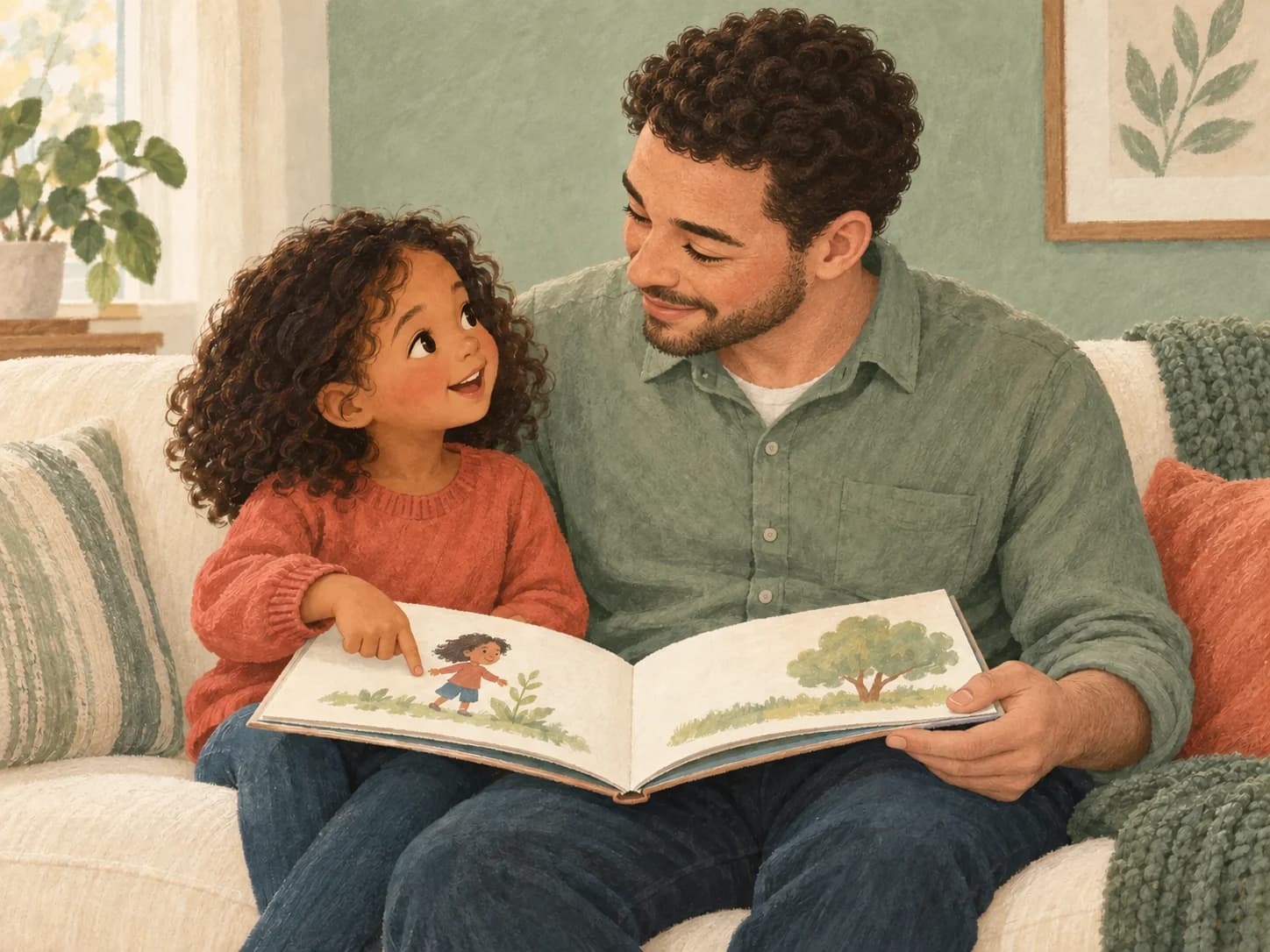
Read at your child’s pace and leave room for their ideas. Our reader includes tips for reading together. Try one question: “How did the hero feel?” or “Why did that help?” Wait for their answer, then connect the action to an ordinary moment in their day. Keep it a conversation they can enjoy.
If you can, print it. In a study of 37 parent-toddler pairs, parents and children talked more about the story with print books than with the electronic books tested. When you read on a screen, make space for the same pointing, turn-taking, and conversation. Say yes when your child wants to hear a favorite again.
What we make
Life lessons and challenges
Our focus. Stories about fears and worries, friendship troubles, honesty, kindness, big changes at home, and tough days at school. The hero practices a useful response, like naming a feeling, asking for help, or making a repair. A hopeful ending leaves room for feelings that take time to work through.
Habits and routines
Habit stories name the moment that starts the action, introduce a replacement, and repeat a simple “when this happens, I can try this” phrase. A slip leads to another try. Routine stories follow a familiar cue, like a timer or song, and show small steps in order. Progress happens through practice over time, at a pace that differs for each child.
Keeping expectations honest
A book can support practice and conversation. It cannot diagnose or treat a condition, guarantee a change in behavior, or set a timeline for progress. If a behavior causes injury or distress, appears suddenly, or gets worse, talk to your pediatrician.
The evidence has limits. Some findings come from small studies or have mixed results. Studies of word learning and shared reading do not establish that a personalized book will change behavior, and no study has tested HabitSeeds books. Our choices about length and language are editorial judgments, informed by research and the reading experience.
A familiar story, without a photo. We use an illustrated human hero and the situation you describe. You never need to upload a photo of your child. Their feelings, choices, and experiences are what we build the story around.
For the moments that are hard to talk about.
Tell us what your child is facing, and we’ll write a story with words and actions to try together.
Create a book